

By Faisal Hayat
September 11, 2023
We all remember walking through different aisles with our parents. Everything was high and out of reach, almost as if it were designed for adults. That much is true with only one exception, the cereal aisle (Breakfast Section).
This aisle felt so vibrant, charming, and if you were bored enough, the cereal mascots would personally call out to you. It started with the cereal’s colorful illustrations, and each detail felt like an irresistible invitation, drawing us in from the very first glance.
This compelling effect did not happen by chance. Cereal companies invested hundreds, if not millions, into designing custom boxes that work(INTERNAL LINKING). They ran tests, gathered genuine feedback, and tuned everything in to maximize appeal.
Beneath the bright, cheerful cereal boxes and their playful mascots are advanced marketing strategies and extensive A/B testing aimed at discovering what truly connects with consumers and what falls flat.
But what is the story behind those so-called ‘’Cereal Mascots’’?
What Are Cereal Mascots?
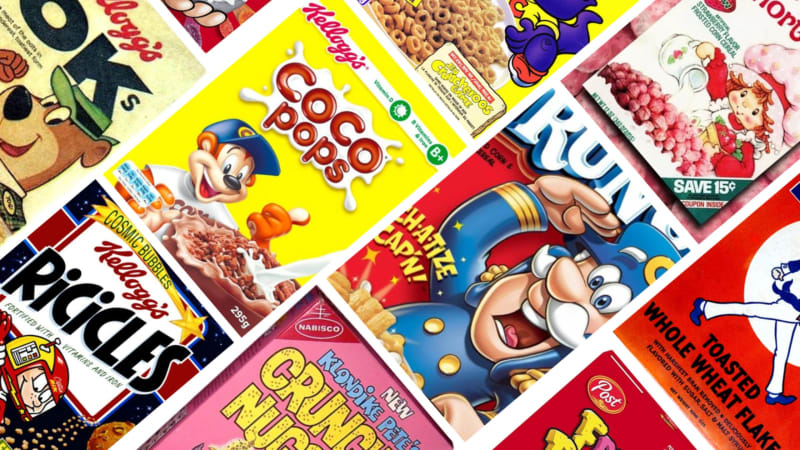
Cereal mascots are branded cartoon characters. They were used on packaging and in advertisements to attract attention and spark emotional connections. The ingenious brands used popular animals that children were taught early on, thus creating a connection and familiarity.
Children at an early age were taught about basic animals such as Lions, Tigers, Roosters, and Parrots. These savvy companies often chose the same familiar animals as mascots, cleverly designing them to captivate their unsuspecting young audiences.
The same companies knew that humans craved familiarity. A human is more likely to connect with something he is familiar with and knowledgeable about, rather than something completely different.
While the cereal aisle was packed with dozens of mascots, only a select few, like Tony the Tiger or Toucan Sam, have achieved iconic status, thanks to consistent branding, emotional resonance, and memorable storytelling.
Okay, with that said, we now know what they are, but who actually made this principal come to life?
Cereal Mascots Origins

Cereal mascot’s roots trace back to the early 1930s-1950s. It all began with the ‘’Quaker Oat Man,’’ After this mascot’s release, companies realized that their buyers were not adults, but rather children.
With this realization in mind. Companies began introducing playful mascots alongside strategic tactics aimed at young consumers. Those tactics ranged from including incentives like toys or drawing books tucked inside each cereal box.
Pioneers like Kellogg’s and General Mills led the movement, recognizing the marketing power of character-driven branding. Their mascots were often friendly animals or quirky figures that emerged alongside bold, colorful packaging tailored for shelf appeal.
This synergy between mascot and custom package design helped establish emotional familiarity and brand loyalty early on.
Thanks to Quaker Oat Man, who revolutionized the industry, more mascots came to life, which meant more fruity adventures. (I am a fruity loop lover)
Famous Cereal Mascots You’ll Never Forget
The strategies used by cereal companies were designed for lasting impact. They carefully aligned cereal mascots with custom brand aesthetics. Aesthetics that sealed the experience by ensuring the box’s contents matched the overall theme.
Take Froot Loops, for example, its mascot, Toucan Sam, is a vibrant tropical bird best known for his long, multicolored beak. His striking appearance made him instantly recognizable and perfectly aligned with the cereal’s colorful, fruity theme.
To put it all into perspective, we’ve compiled a small table identifying Toucan beak colors and the colors used in the Fruity Loops.

| Toucan Beak Colors | Colors used in Fruity Loops |
|---|---|
| Red | Red |
| Green | Green |
| Orange | Orange |
| Blue | Blue |
| – | Purple |
This shows that the manufacturers actually were accurate, as purple was one of the added by Kellogg’s as an invention, but the remainder of the colors were inspired by the original toucan bird.

Those paperboard boxes contained all the marketing of Kellogg’s and are what helped them succeed.
If you wanted to see your childhood mascot mentioned here, don’t worry, we’ll cover the most well-known Cereal Mascots in the next section.

